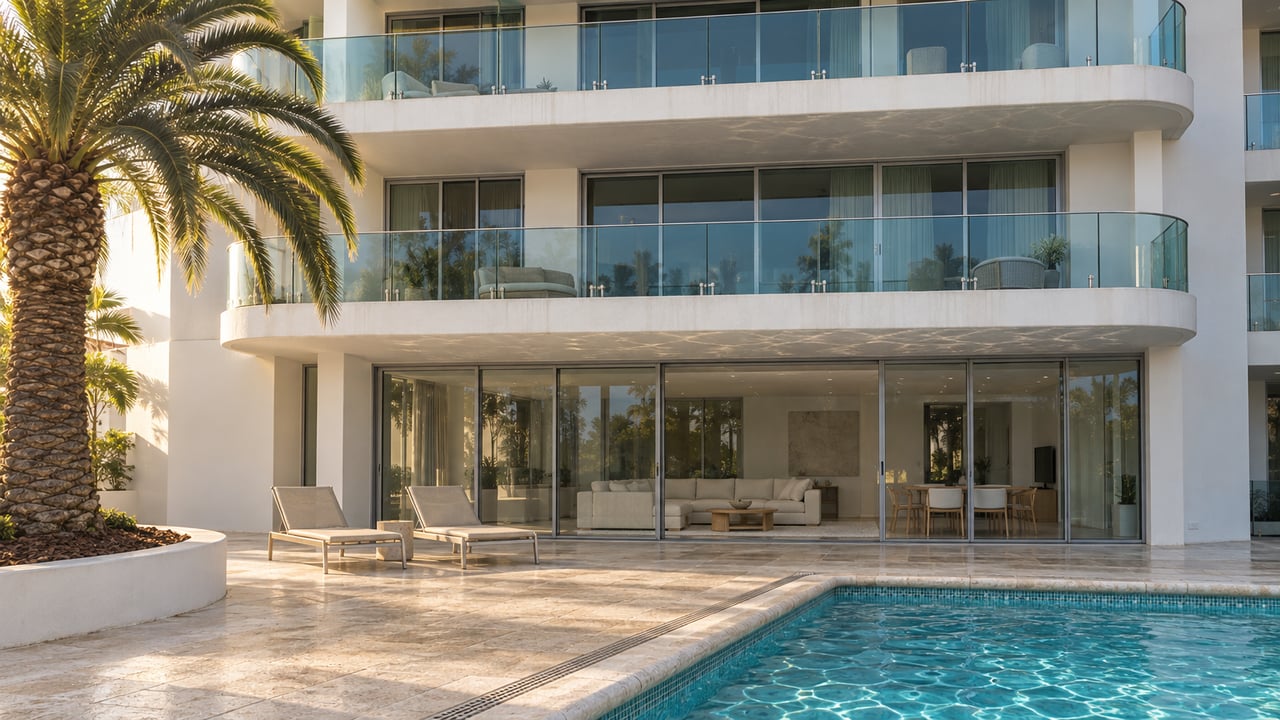
If you're financing a Gulf Shores condo this fall, the lender reviews two things: you and the building. For loan applications dated on or after August 3, 2026, Fannie Mae no longer allows the lighter Limited Review for established condo projects. Lenders now have to run a Full Review, or use a waiver that mostly applies to buildings with ten or fewer units. A beach tower with a few hundred units doesn't qualify for that waiver. So the association's budget, reserves, master insurance policy and repair history are part of your loan file, whether or not you've read them yet.
I've walked a lot of buyers through units with new floors and fresh paint. Good finishes count, and with my background in flooring and decorating I notice them right away. But a new kitchen can't fix an underfunded reserve account. The 2026 rule changes make that gap matter much more when you're getting a loan.
Rental numbers are up. Condo sales are slow.
The market data for summer 2026 points two ways. That's the market a financed buyer is shopping in while the new building rules take effect.
| Measure | Period | Figure | Year earlier |
|---|---|---|---|
| Coastal Condos average sale price, Baldwin REALTORS | August 2026 | $697,805 | Down 7.17% |
| Coastal Condos average days on market | August 2026 | 129 days | Not reported |
| Coastal Homes average days on market | August 2026 | 84 days | Price down 1.48% |
| Vacation rental occupancy, Gulf Shores & Orange Beach | August 2026 | 51.3% | 48.6% |
| Vacation rental RevPAR | August 2026 | $142 | $130 |
Vacation rentals earned more per available night in August 2026 than in August 2025, and the average daily rate rose from $266 to $276. RevPAR was back about level with August 2024, when it was $141, so rentals recovered rather than broke records. Over the same stretch, beach condos sold for less and took 45 more days to sell than beach houses in the same Baldwin REALTORS report.
The countywide condo picture looks similar. The Alabama Center for Real Estate reported that Baldwin County condos averaged 119 days on market in July 2026, 46 days slower than a year earlier, with 11.0 months of supply. ACRE puts the balance point between buyers and sellers at about 6 months. The July median was $571,500. ACRE cautions that small monthly sample sizes make prices jumpy.
Baldwin REALTORS also notes that its new MLS platform and redrawn market areas can make comparisons with older reports less reliable. None of these reports says why condos are selling slowly. For a buyer with a loan, though, the building now has to pass its own review before closing, and that review looks at records most buyers never see.
What Fannie Mae said it was worried about
Fannie Mae explained its reasons in Lender Letter LL-2026-03, issued March 18, 2026. Since adding critical-repair rules in 2023, it found that condo projects with underfunded reserves tend to be the ones that need critical repairs. It also said owners in those projects can face unexpected special assessments or higher dues. Its 2026 changes target that pattern.
Here is how the changes line up by date. Lenders could adopt several of them early, so the dates below are the deadlines.
- Effective March 18, 2026. Fannie dropped the 50% cap on investor-owned units in established projects for investor loans under Full Review. This is good news for Gulf Shores towers where many owners rent their units. The 50% presale requirement still applies to new projects.
- Required by July 1, 2026. A master policy's per-unit deductible cannot exceed $50,000 for any required peril. When a master policy has a per-unit deductible, the buyer must carry their own unit-owner policy.
- Required by August 3, 2026. Limited Review is gone for established projects. If a lender relies on a reserve study to show the reserves are adequate, the association's budget must fund the highest allocation the study recommends. The "baseline" funding method, which lets reserves fall close to zero, no longer qualifies.
- Required by January 4, 2027. Under Full Review, the minimum share of the annual budget set aside for capital expenditures and deferred maintenance rises from 10% to 15%. This is not in effect yet. Still, an association writing its 2027 budget this fall at 10% could fall short of the new minimum by the time a buyer applies in January.
Freddie Mac made similar changes. It retired its Streamlined Review for applications received on or after August 3, 2026, and its 15% reserve minimum also starts with applications received on or after January 4, 2027.
The insurance math in a coastal tower
Insufficient master insurance is one of the most common reasons Fannie lists for a project being ineligible. Fannie requires master coverage equal to at least 100% of the estimated replacement cost of the project, including common elements and residential structures. Roofs must be insured, but as of 2026 they no longer have to be insured at replacement cost, and Fannie retired the inflation-guard requirement. Those changes loosen the rules a little.
Freddie Mac adds a limit on deductibles. A master policy's deductible for required perils can't exceed 5% of the building coverage limit per occurrence, and a per-unit deductible can't exceed $50,000. Windstorm coverage has to include named storms. Your own HO-6 policy has to cover the interior items the master policy doesn't, or match the per-unit master deductible, whichever is greater. Its deductible can't exceed 5% of the coverage limit or $2,500, whichever is greater.
For a buyer, the master policy's declarations page tells you two things. It shows whether the building fits the lender's limits, and it shows how much of a storm loss could fall on you as a unit owner.
How a building becomes ineligible
Freddie Mac's definition of critical repairs is the most specific one available. It covers material deficiencies likely to cause a critical element or system to fail within one year, unrepaired mold or water intrusion, advanced deterioration, failed mandatory safety or structural inspections, and unfunded repairs costing more than $10,000 per unit that are due within the next 12 months. The $10,000 test applies only to unfunded work. Repairs already covered by a special assessment don't count toward it. Routine capital replacements handled within the normal budget are not critical repairs.
A building flagged for critical repairs stays ineligible until the work is done and an engineer's report, or similar evidence, shows the problem has been resolved. Freddie also requires lenders to review any structural or mechanical inspection completed within three years, plus the purpose, amount, remaining balance and payoff date of every current or planned special assessment. "Planned" includes assessments the owners have approved but the board hasn't started collecting yet.
Fannie reported that, as of August 2025, 3.6% of condo projects nationally had an ineligible status. The most common reasons were insufficient master insurance and critical repairs. Fannie doesn't publish those decisions. It shares them only with lenders, HOAs, management companies and authorized advisors, and a "no findings" status means no problem has been identified yet. It does not mean the project has been approved.
What I ask for before writing an offer
For a financed purchase, I treat the building's paperwork the way I treat a subfloor. I want to see it before anyone falls in love with what's on top. My list for Gulf Shores condos:
- The lender's condo questionnaire, completed by the management company, sent to your lender early, and reviewed before your inspection period runs out
- The current budget, with the dollar amount set aside for reserves and the share of income that amount represents
- The most recent reserve study, plus whether the budget funds its highest recommended allocation
- The master policy declarations page, showing the coverage amount, the wind or named-storm deductible and any per-unit deductible
- Board minutes from the past year, which is where planned special assessments and engineering findings usually show up first
- Any structural or mechanical inspection from the last three years, along with proof that any listed repairs were completed
- Current and approved special assessments, each with its purpose, remaining balance and payoff date
The goal is to find out about a building problem before the appraisal is ordered. If a building can't pass a Full Review, a buyer who needs a conventional conforming loan can't close on any unit in it. That works in favor of buyers who can pay cash, and it's something sellers in those buildings need to understand before they set a price.
Sellers can help their own sale by getting the association's documents ready before listing. A unit in a building with a well-funded reserve study and a clean master policy is an easier unit to finance, and buyers can see that.
FAQ
Does paying cash avoid the project review? The project review is a requirement for the loan, so a cash purchase doesn't go through it. Cash buyers still pay whatever dues and special assessments the association charges, so the same documents still tell you what the condo will cost to own.
Is the 15% reserve rule in effect now? No. Fannie Mae and Freddie Mac both apply it to applications dated or received on or after January 4, 2027.
Can I look up whether a building is approved? Not on your own. Fannie Mae limits its project decisions to lenders, associations, management companies and authorized advisors, so your lender is the one to ask.
Does this make investor purchases harder? For established projects under Full Review, Fannie's 2026 changes removed the 50% investor-concentration limit on investor loans, which helps in buildings with many rental units. The reserve, insurance and repair standards still apply.
If you're considering a Gulf Shores condo and plan to finance it, call me before you write an offer. I'll help you get the questionnaire, budget, reserve study and master policy in front of your lender early, in person or over FaceTime if you're buying from out of town. Contact Robin Roberts and let's look at the building together.
This article is general information, not legal, tax or financial advice. Consult a qualified professional about your situation.